Exporting Live Plants From Thailand: Phytosanitary Certificates, CITES and What Can Go Wrong
Customs holds happen in plant export, and a live plant cannot wait one out. The certificate, the permit and the flight have to be lined up before the box is sealed.
The paperwork a live plant needs to leave Thailand
The phytosanitary certificate is issued by Thailand's Department of Agriculture. It confirms the plants are free of pests and disease, and it travels with the shipment as proof to the destination country. Without that certificate most countries will not accept a live plant at all, so this is not paperwork to skip. Dragon Courier arranges it free of charge for the USA and the UK, and for a fee on any other market.
CITES documents are the second layer. Orchids always need CITES: the whole family is on the protected species list. Dragon Courier can send CITES paperwork to the USA and the UK, free of charge. For any other market, the destination has to be checked first.
What changes by species is how many permits that triggers. Appendix I is the more protected tier, and a species listed there needs a Thai export permit and an import permit from US wildlife authorities before it can enter. Most commercially traded orchids sit in Appendix II, where the Thai export permit on its own is enough. Cost and issuing time depend on the species and on the authority granting it, so neither has one figure worth publishing.
Dragon Courier holds an import permit for each market it serves. Some plants are restricted, so the species is worth checking before a booking is made.
For the United States most species need Form PPQ 587, applied for through the APHIS eFile system at least 30 days before the plants are due to arrive, and approvals often take longer than that. Which species need what is checked against the plant's country of origin on the APHIS ACIR database, not guessed from the plant's name. And buying from an overseas nursery does not move the obligation onto the seller: APHIS puts it plainly, "Are you buying plants or seeds through an e-commerce site? If so, you are considered an importer and most likely need a permit."
Which markets take live plants out of Thailand
For live plants, Dragon Courier currently serves the USA, the UK, Canada, Europe, Singapore and Hong Kong.
Each market sets different requirements, so the destination is worth confirming before the export is planned.
Why plants are different from every other shipment
Live plant export is one of the few shipping categories where the paperwork can outlast the product. A bare-root plant has days, not weeks, before its condition starts to slip, which is why the certificate and the flight need to move together, not one after the other. A plant sitting at customs waiting on paperwork is losing the same hours it needed for the flight.
A standard drop-off counter is the wrong place to start: booking an ordinary parcel takes a label and a weight. Booking a plant takes a certificate obtained in Thailand before the box is sealed, in many cases a permit filed with the destination country weeks in advance, and an inspection on arrival. None of that can be corrected once the plant is in the air.
How a plant is packed so it survives the trip
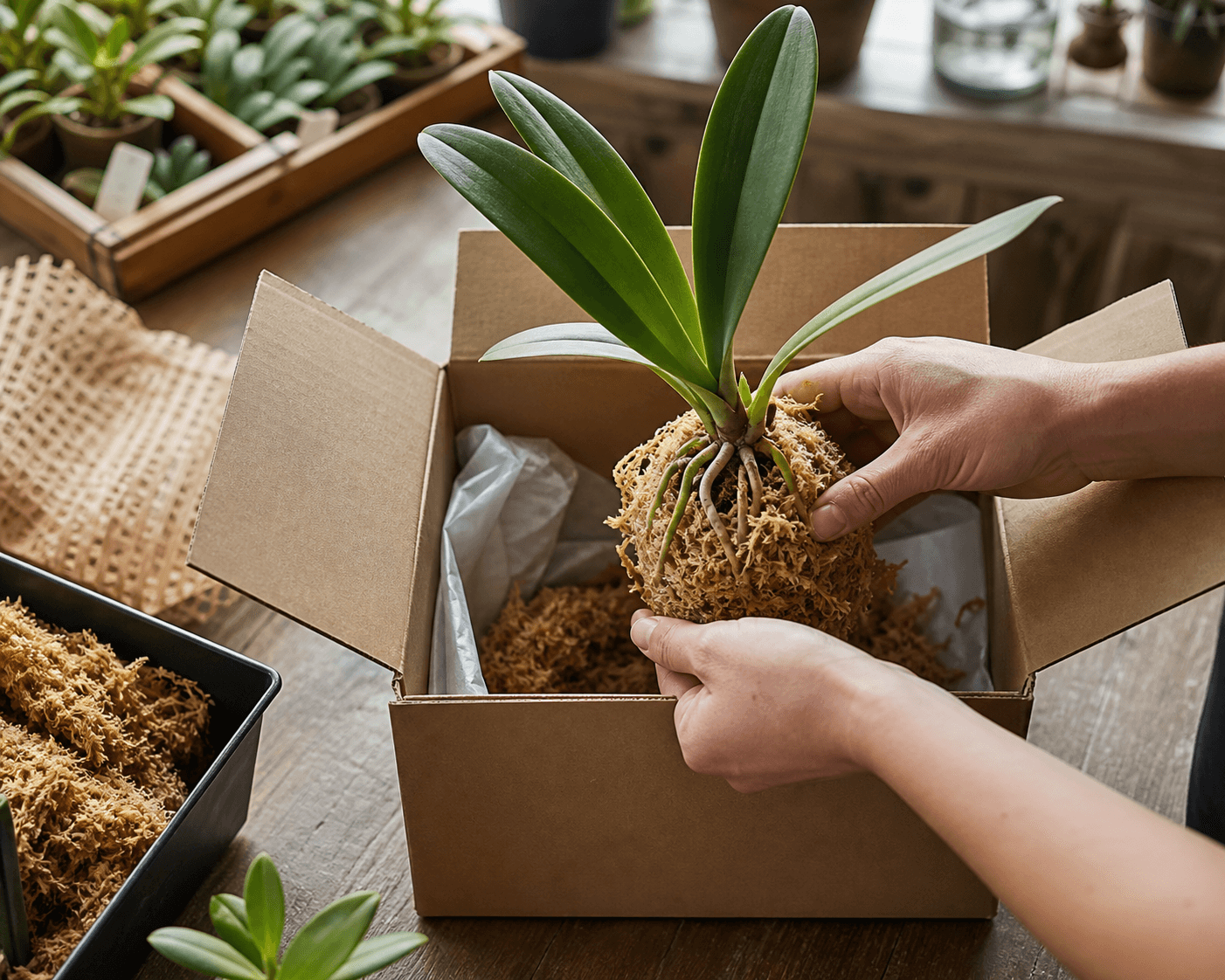
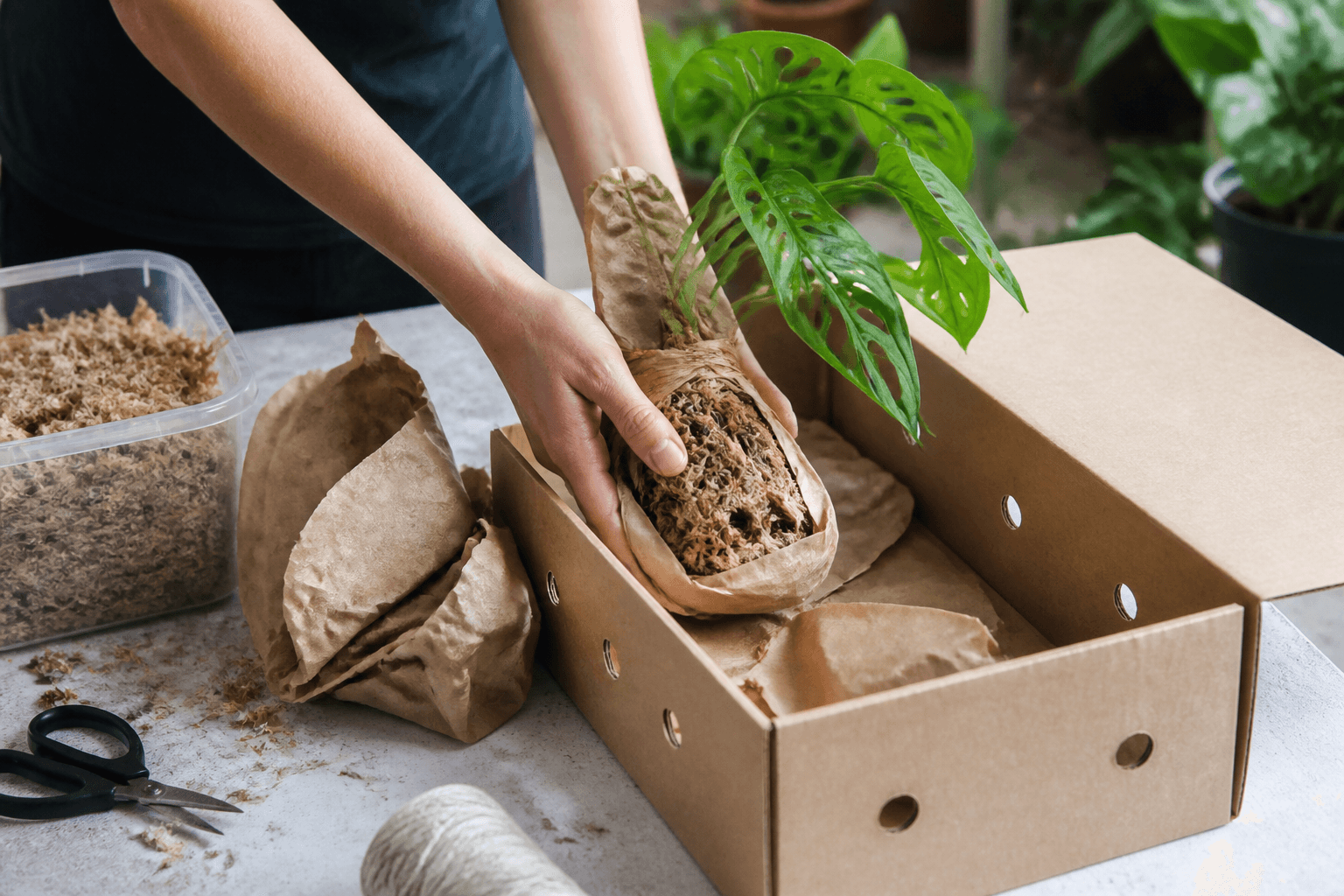
Plants are shipped bare-root, wrapped in new sphagnum moss. The reason is soil: APHIS regulates it as a commodity in its own right, with its own import requirements, because soil carries pests and pathogens an inspection at the port will not reliably catch.
Dragon Courier provides door to door temperature control, and the plants go on the fastest available flight and courier route. Cold snaps at transit hubs are the main winter risk for live plants, and that is what the temperature control is there for. Plants still ship through winter.
Every plant is different, so the seller who packed it is asked how they would like it handled, since they know the species best.
Dragon Courier boxes and bags are built stronger for international delivery, and repackaging is not charged for. Packing supplied by the seller cannot be guaranteed to arrive undamaged.
Insurance on live plants
Live plants are the one shipment Dragon Courier does not insure. Where something goes wrong, it investigates what happened so it does not happen again.
Delays work on the same principle: the reason is checked and the shipment pushed to expedite. How claims, delays and liability are handled on any shipment is set out in the refund and cancellation policy, worth reading before the first booking.
About Dragon Courier
Dragon Courier is a Bangkok courier and Thailand's number one exporter of live plants. Over 30 years in this business, under the same management team for most of it. It started as a British business and is Thai family-run today. That is now more than 20,000 shipments a month to over 200 destinations, with a team of over 50 people and the full story on the about page.
When a shipment does get held, Dragon Courier deals with USDA and the plant seller in Thailand directly to get it released urgently.
Contacts and drop-off
Species and destination market are the two things needed to price the paperwork. Office +66 2656 9019, Justin is on LINE and WhatsApp at +66 6-5937-0812, or info@dragoncourier.com. Drop-off is until 17:00, Monday to Saturday, at the Bangkok office on Sukhumvit Soi 4 or the Chiang Mai office on Viangbua Road, and a pickup can be arranged for a date and time that suits.
Frequently asked questions
More of them, on every service, are on the FAQ page.
Do I need an import permit for plants?
Dragon Courier holds an import permit for each market it serves, and can supply a copy covering the plants being shipped.
Can Dragon Courier get me a phytosanitary certificate?
Yes. For the USA and the UK it is free of charge; for other countries there is a charge.
What about CITES-listed plants?
CITES documents go to the USA and the UK. For any other market, the destination has to be checked before booking.
Can orchids be exported from Thailand?
Yes. Orchids are CITES-listed as a family, so they need CITES paperwork, which Dragon Courier sends to the USA and the UK, free of charge.
How are the plants packed?
Bare-root, wrapped in new sphagnum moss, with door to door temperature control on the fastest available route.
What happens if my plants get held at customs?
Dragon Courier works directly with USDA and the plant seller in Thailand to get the release moving urgently.
Is there insurance if the plants arrive damaged?
No, live plants are not insured, which is worth knowing at the booking stage. Dragon Courier investigates the cause so it does not happen again, and the refund and cancellation policy sets out how claims are handled.
How much does a phytosanitary certificate cost in Thailand?
There is no single published fee and official pricing varies by request. On a Dragon Courier plant export it is free of charge for the USA and the UK, and charged for other countries.
Will a standard parcel courier ship live plants?
A counter service is not built for the paperwork a plant needs: a certificate obtained in Thailand, often a destination import permit, and an inspection on arrival. That preparation happens before the shipment leaves, arranged by someone who handles plant exports specifically.
Why are potted plants not accepted into the United States?
Because of the soil, which APHIS regulates separately from the plant. Plants travel bare-root with the roots cleaned and wrapped in a damp medium. On a Dragon Courier shipment, that's fresh sphagnum moss.
Shipping something from Thailand?
Tell us what you are sending and where it is going, and we will come back to you with a price and a realistic timeline.
Get a quote