Shipping from Thailand to the USA: What It Costs and How It Works

A parcel from Thailand to the United States moves by air in a few business days. What decides whether it arrives on time is not the flight, it is the customs entry at the other end, and that procedure changed this year.
What a USA shipment needs from the sender
The contents of the package, and the receiver's name, address and contact number. That is the whole list. No other information is required.
What counts is that the description is accurate. "Gift" or "electronics" tells customs almost nothing, and a vague description is one of the most common reasons a parcel gets pulled aside for manual review. The declared value on the invoice has to match what is in the box for the same reason: anything inconsistent between the box, the invoice and the value slows the shipment down.
No account is required to start sending, and there is no cap on volume.
How the parcel actually moves
Everything goes by air. Dragon Courier clears customs in-house rather than handing it to a broker, then a courier delivers the last leg, and for the USA that means straight to the customer's door.
Dragon Courier intentionally doesn't get signatures on delivery, as often it can delay delivery. If the recipient is out and the package cannot be left somewhere safe, the driver may take it back to the hub for a next day attempt, or leave it at a nearby pick up point.
Door to door tracking is there on export day, and the sender can share it with the recipient. Once delivery is complete, Dragon Courier updates a file to show proof of delivery and sends it over.
The mode is what decides the calendar. Express air courier moves a parcel in a few business days. Consolidated air freight runs about a week to ten days, because it waits for other cargo before it leaves. Sea freight is a month or more and is rarely used for parcels at all. The flight is the predictable part of any of those. Customs on arrival is not, and that is where a shipment usually loses its days.
What it costs
The price is weight and dimension, quoted for the country. No hidden fees, no surcharges. One rate for the country covers customs clearance, transportation, delivery and documentation. Prices by product, for garments, car parts and live plants, are in the guide on the shipping cost from Thailand to the USA. Current rates by weight are on the Thailand to USA shipping page.
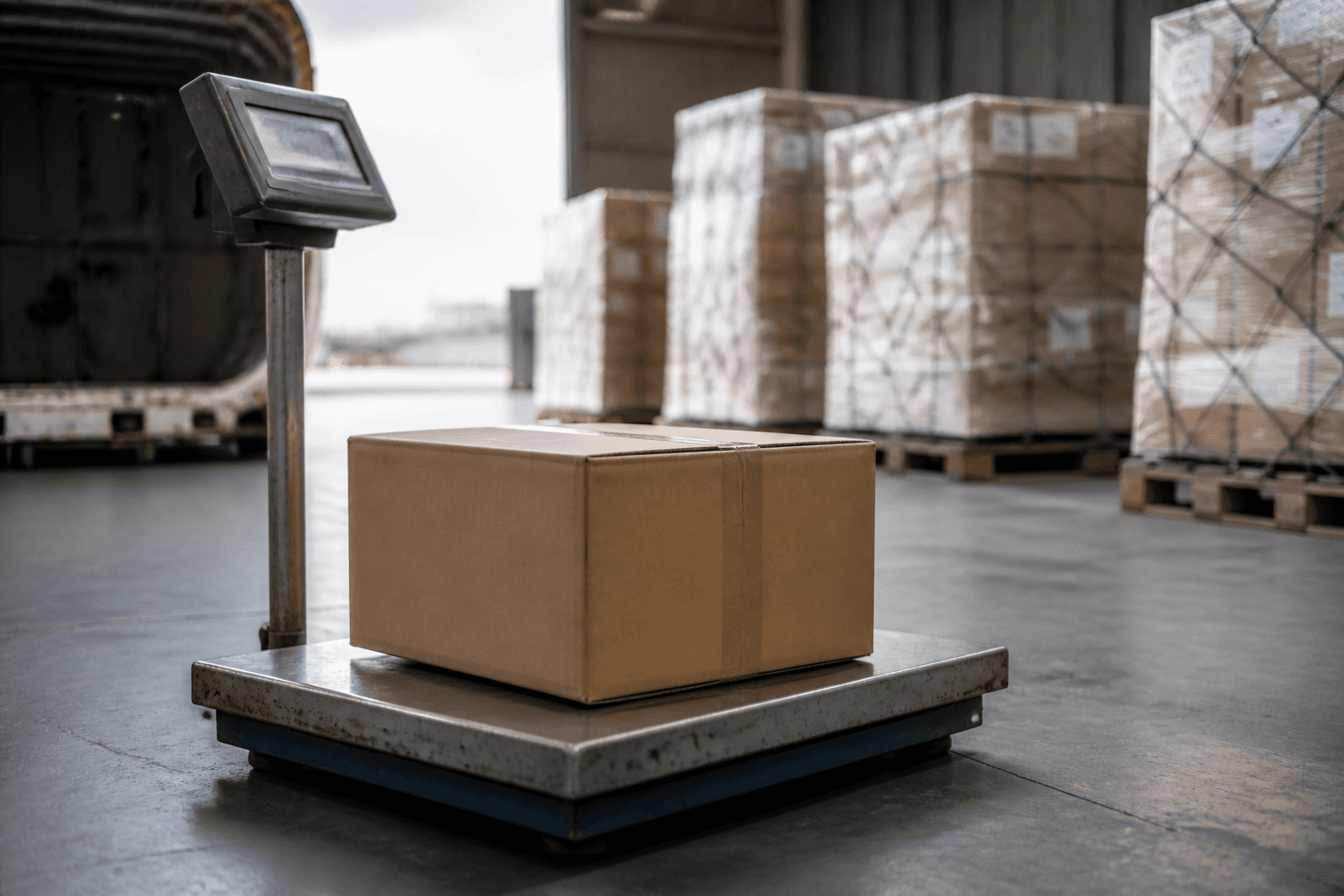
Dimension counts as much as the scale does. A box is billed on whichever is greater, its actual weight or the space it takes up in the hold, which is why a light but bulky carton costs more than the number on the scale suggests.
The other half of the sum is duty, and the rules on that changed. The exemption that let parcels of 800 dollars or less enter the United States without a formal entry has been suspended. The Federal Register notice says it plainly: "all entries of merchandise valued at $800 or less arriving through all modes other than the international postal network must utilize formal or informal entry procedures." (Vol. 91, No. 120, p. 37789, 19 CFR Part 10, docket USCBP-2026-0760.) Parcels moving by air courier are not international mail, so the rule applies to them in full. A 50 dollar gift and a 5,000 dollar shipment now go through the same basic clearance, with different amounts of duty owed.
Duty itself starts with the HTS code, the Harmonized Tariff Schedule number that tells U.S. Customs and Border Protection what the product actually is. Two similar looking items can carry different codes and different rates. The rate is applied to the customs value, generally the price paid plus freight and insurance, and any applicable fees are added before the shipment is released. The rate on Thai goods has moved more than once over the past year, so no percentage is worth publishing here. The current one for a given code is at hts.usitc.gov, or a broker will confirm it on the day.
Someone has to be legally responsible for getting that right. That is the Importer of Record, the party answering for the paperwork, the duty owed and the accuracy of what was declared. On a Dragon Courier shipment to the USA that party is Dragon Courier, not the customer receiving the parcel.
Nothing extra for an urgent shipment, nothing extra for a remote address. There is no discount for anybody either: one price for all customers, whether the sender ships one box or ships every week. The rate quoted for a first shipment is the same rate a weekly shipper pays.
Payment is cash or bank transfer, before export, for every customer. Dragon Courier can provide any invoice a sender requires.
Live plants to the USA
Plants for the USA go by air, door to door, and the paperwork is the part people underestimate when they try it alone.
Plants entering the United States need a phytosanitary certificate from Thailand's Department of Agriculture confirming they are free of pests and disease, and many species also need a USDA-APHIS import permit, most commonly Form PPQ 587, applied for through the APHIS eFile system at least 30 days before the plants are due to arrive. Orchids carry a further layer because of CITES: species in Appendix I need an export permit from Thailand and an import permit from U.S. wildlife authorities, while most commercially traded orchids sit in Appendix II, where only the Thai export permit is required.
Buying from an overseas seller does not move any of that onto the seller. APHIS puts it plainly: "Are you buying plants or seeds through an e-commerce site? If so, you are considered an importer and most likely need a permit." A smaller group of plants and seeds is exempt, and the place to check is the agency's ACIR database, which lists entry requirements by commodity and country of origin.
On a Dragon Courier shipment none of that falls on the sender. Dragon Courier arranges the phytosanitary certificate, free of charge for the USA and the UK and for a fee elsewhere, sends CITES documents to the same two markets at no charge, and takes care of the rest of the import documentation. No import permit is needed from the sender either: Dragon Courier has an import permit for each market, and the team can send a copy of the plants on it.
Plants are shipped bare-root, with new sphagnum moss. There is door to door temperature control, the plants go on the fastest flight, and Dragon Courier sends during winter too.
Plants generally arrive in 2-4 working days. Delays are extremely rare, and Dragon Courier generally clears customs the same day the shipment is presented. If there is a hold, the team works with USDA and with the plant seller in Thailand to get a release urgently.
The packing itself is best done by the plant seller, they know what that plant needs, and the team can give all the advice needed before the box is sealed.
There is no insurance on live plants. If they arrive damaged, Dragon Courier investigates how it occurred to avoid it happening again.
When something goes wrong
When a shipment runs into trouble, the first move is the same every time: Dragon Courier checks what happened and pushes to get the parcel moving again. On a delay that means finding the reason and expediting it, and the proof of delivery closes the loop, confirming the package reached the right person or company.
Insurance is available on parcels and it covers loss. Fragile or valuable items: wrap them very carefully and buy the insurance. What the cover includes, and how claims and delays are handled, is set out in the refund and cancellation policy, the place to check before booking. Where something does go wrong, Dragon Courier investigates the cause so the same thing does not happen twice.
One thing worth checking before the box leaves: an address cannot be changed after export. For a claim or a question on a shipment, message the team and they pick it up directly.
What cannot be shipped
There are many things that don't go to any country, including but not limited to religious items, batteries and anything illegal. This is a long list, so check with the team if you think your item is on it.
Maximum weight and size depend on the country, and food, documents and medical items depend on the market.
About Dragon Courier
Dragon Courier is a Bangkok courier shipping worldwide from Thailand. For the USA it runs its own service all the way to the destination and clears customs itself, then UPS covers the last leg to the door. All duties, costs and tariffs sit inside the fee, so the customer receiving the parcel pays nothing on arrival.
Customs clearance is the main selling point of Dragon Courier, and it runs its own service here in Thailand to the destination country, so it has control of all aspects.
It is also the number one exporter of live plants in Thailand, and the USA is one of the markets it serves.
Frequently asked questions
More of them, on every service, are on the FAQ page.
Will my customer in the USA pay import tax?
No. On a Dragon Courier shipment all duties, costs and tariffs are included in the fee, so there is nothing to pay on arrival.
How is the price calculated?
On weight and dimension, then quoted for the country. No hidden fees, no extra surcharges.
Do I need an import permit for plants?
No. Dragon Courier has an import permit for each market. Contact the team for a copy of the plants on it.
How long does it take?
Depends on the market, but for plants generally 2-4 working days. Message the team for the estimate on your route.
Can I change the delivery address after booking?
No, Dragon Courier cannot change an address after export.
Is there a discount for regular shipments?
No, there is a 1 price for all policy, for all customers.
Is Thailand still shipping to the United States?
Yes, and without interruption. What changed is the customs side, not the route: every shipment now goes through a formal or informal entry, and the duty-free treatment low value parcels used to get no longer applies.
Do I have to pay tariffs on goods from Thailand?
On a Dragon Courier shipment, no, because they are already inside the fee. Shipping any other way, in most cases yes, at a rate that depends on the item's HTS code on the day it ships.
How long is shipping from Thailand to the USA?
Express air courier is a few business days including clearance, consolidated air freight roughly a week to ten days, sea freight a month or more. For plants on a Dragon Courier shipment, generally 2-4 working days.
Shipping something from Thailand?
Tell us what you are sending and where it is going, and we will come back to you with a price and a realistic timeline.
Get a quote